
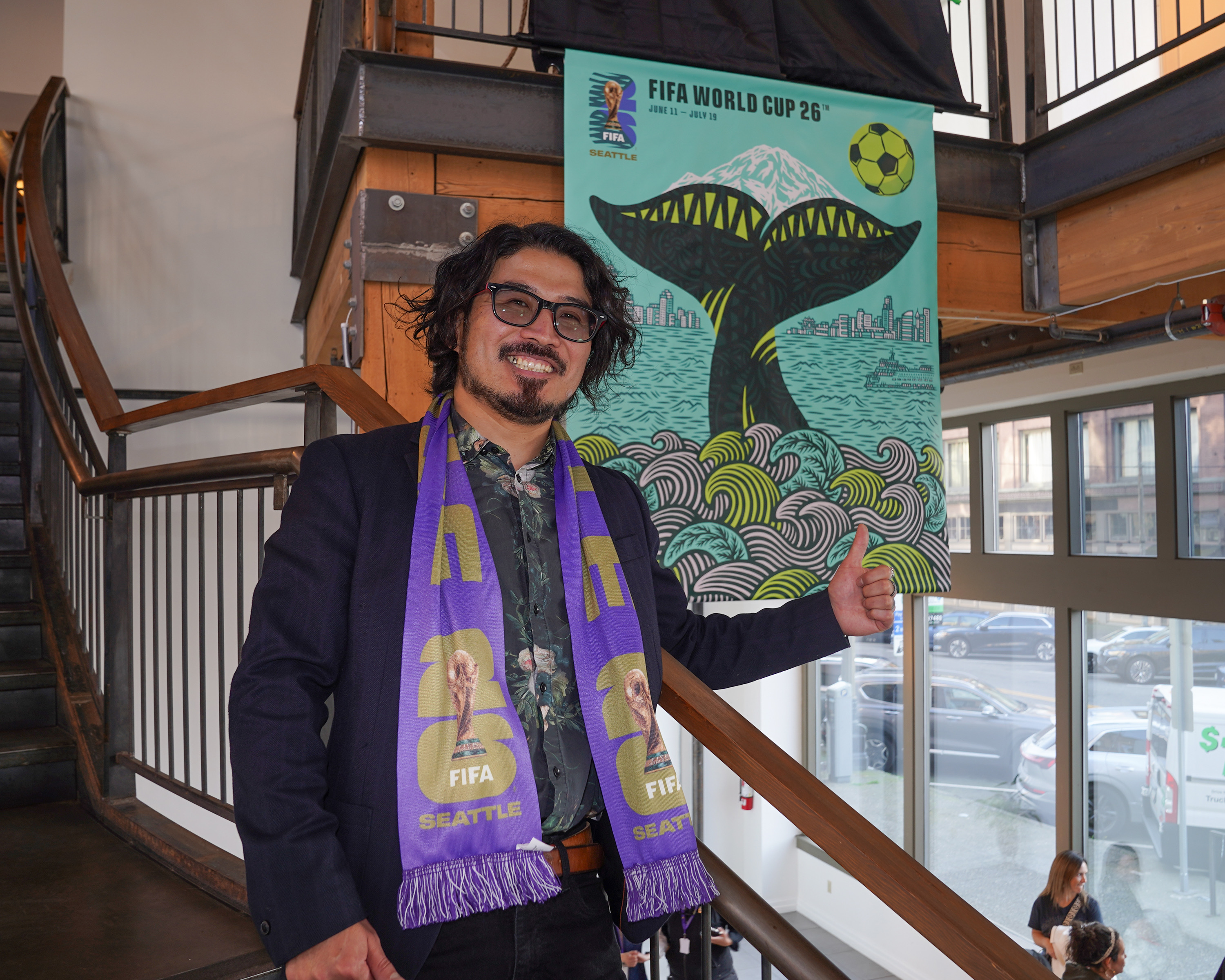
Created by Camano Island artist Shogo Ota, Seattle’s official FIFA World Cup 26 Host City Poster became the visual thread connecting the tournament to the city and many of the Legacy projects that followed.
The Portrait of a City
For the first time in FIFA World Cup history, each Host City commissioned an official poster of its own. Seattle opened the process to artists across Washington through a public competition, with outreach in English, Spanish, Mandarin, Vietnamese and Somali.
More than 200 people registered and 42 completed submissions were received. A nine-person panel of local community leaders narrowed the field to four finalists from four different Washington cities.
The winning design came from Shogo Ota, a Japanese artist and graphic designer based on Camano Island whose work had long blended artistic traditions from Japan with the landscapes, cultures and rhythms of the Pacific Northwest.
.jpg)
.png)
Look a Little Longer
Ota didn’t try to capture Seattle with a single landmark.
His poster rewarded a closer look. Mount Rainier rose above a landscape filled with local references, including the historic Chinatown Gate, Pacific Science Center and Lumen Field. At the center, an orca tail emerged from the water.
“I hope people make good memories while they’re here, and I also hope people find the small details in the poster that say so much about who we are in Seattle and Washington,” Ota said when the design was unveiled.
The design quickly earned attention beyond Seattle. Sports Illustrated ranked Ota’s work No. 1 among the FIFA World Cup 2026 Host City posters, praising its use of Seattle’s natural landscape, local iconography and color.
Back home, the whale tail was already becoming much bigger than one poster.
Not Just a Fluke
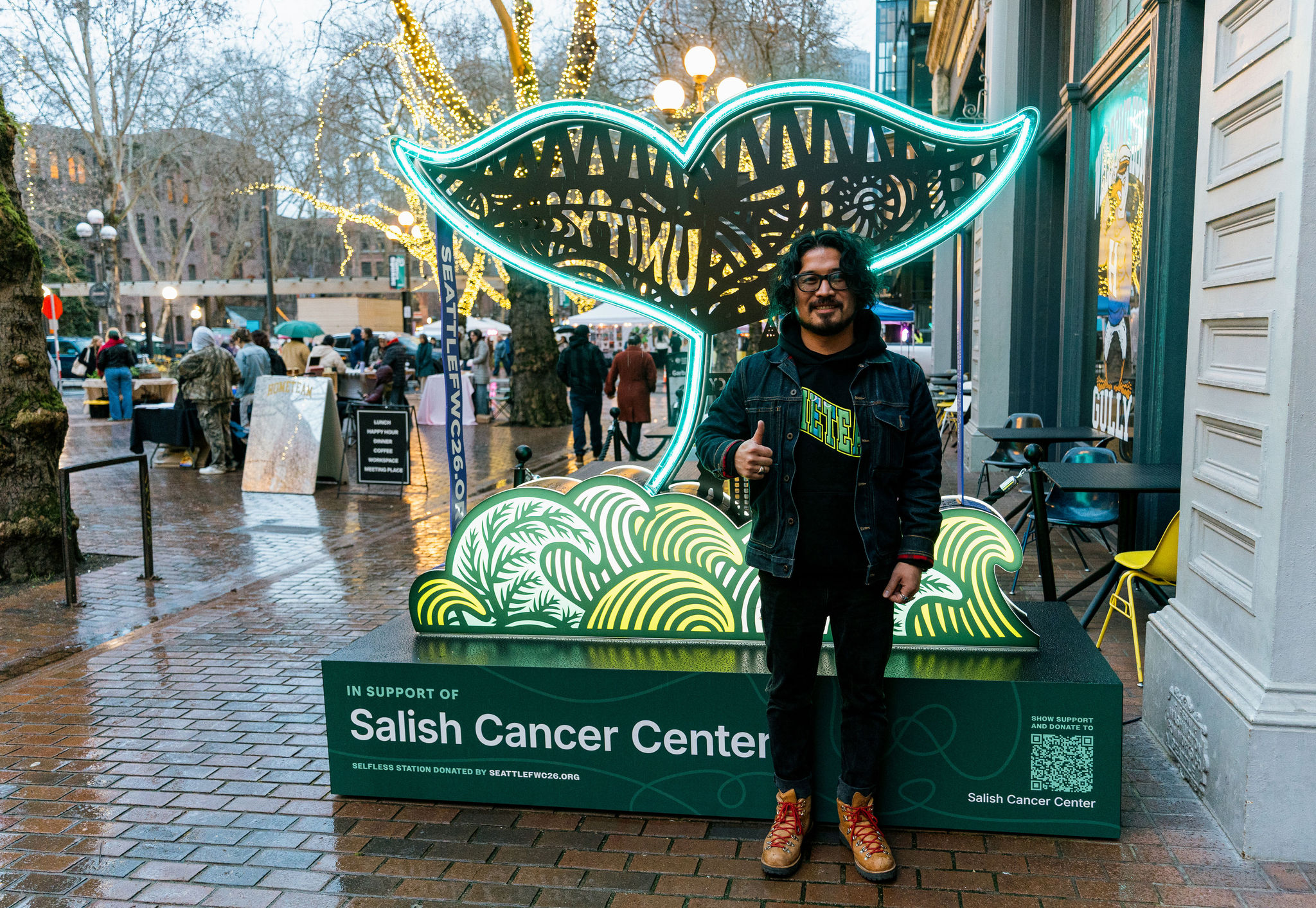
The orca tail became one of the most recognizable images of Seattle’s World Cup.
It glowed in the windows of more than 350 small businesses as SEA Beacons. It appeared on Selfless Stations, inside SEA&WIN, across merchandise, wayfinding, stickers and community activations throughout the region.
The artwork also became a connective thread between projects that otherwise looked very different from one another. Follow the whale tail and it could lead to a neighborhood business, a piece of public art, a nonprofit or somewhere new to explore.
By the time the World Cup arrived, Shogo Ota’s artwork was no longer simply Seattle’s Host City Poster; it had become the symbol of Seattle’s World Cup.
Related Legacy Projects
See All Projects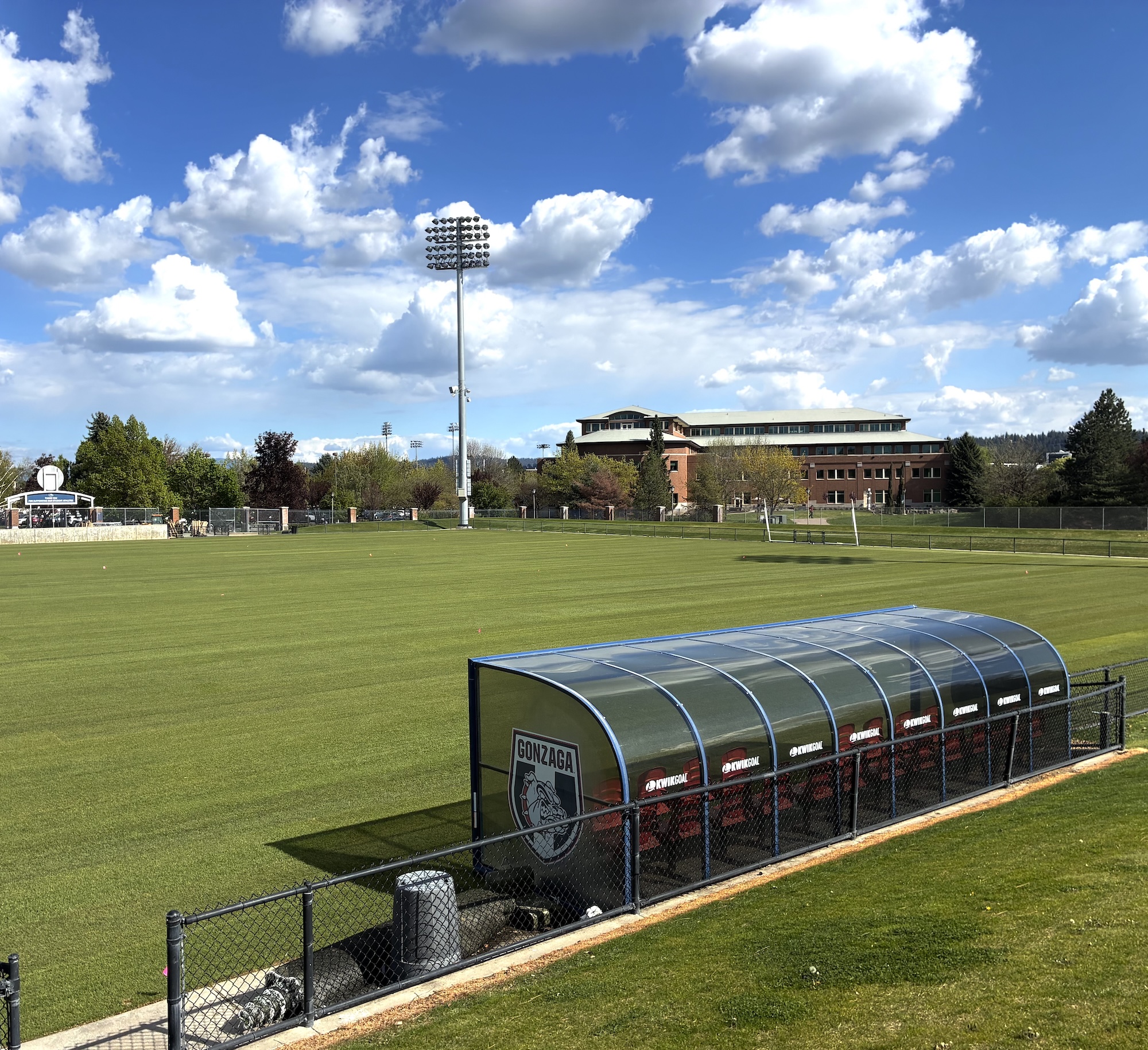
New, World-Class Fields
New, World-Class Fields
FIFA World Cup preparation helped accelerate new and improved soccer facilities at the University of Washington and Seattle University, creating permanent investments in collegiate athletics and the region’s ability to host future competition.
Summer of Reuse
Summer of Reuse
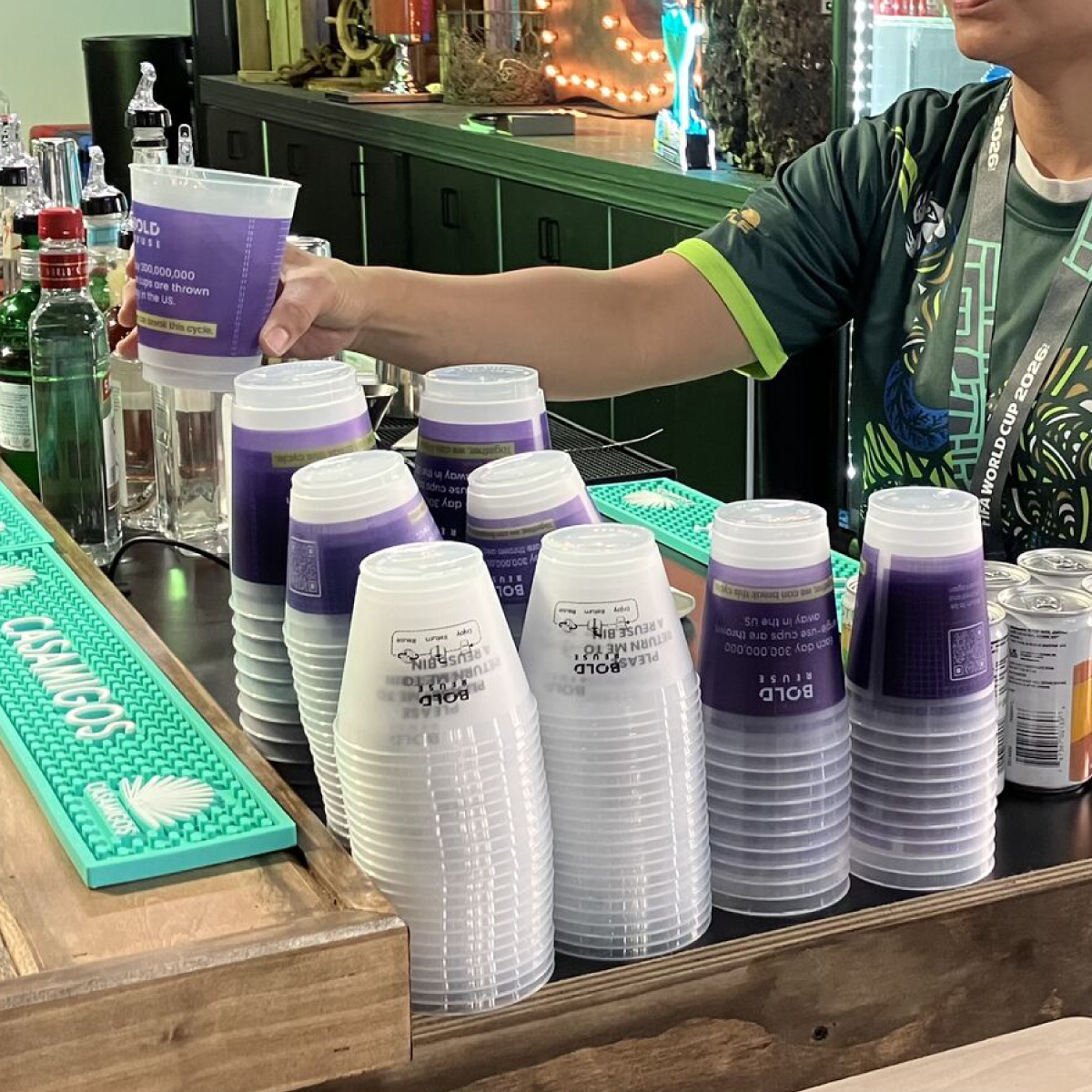
Reusable cups, dishes and serviceware replaced more than 20,000 disposable items at World Cup celebrations and community events while helping Seattle test a system that can be used again.
Lumen Field Shines
Lumen Field Shines
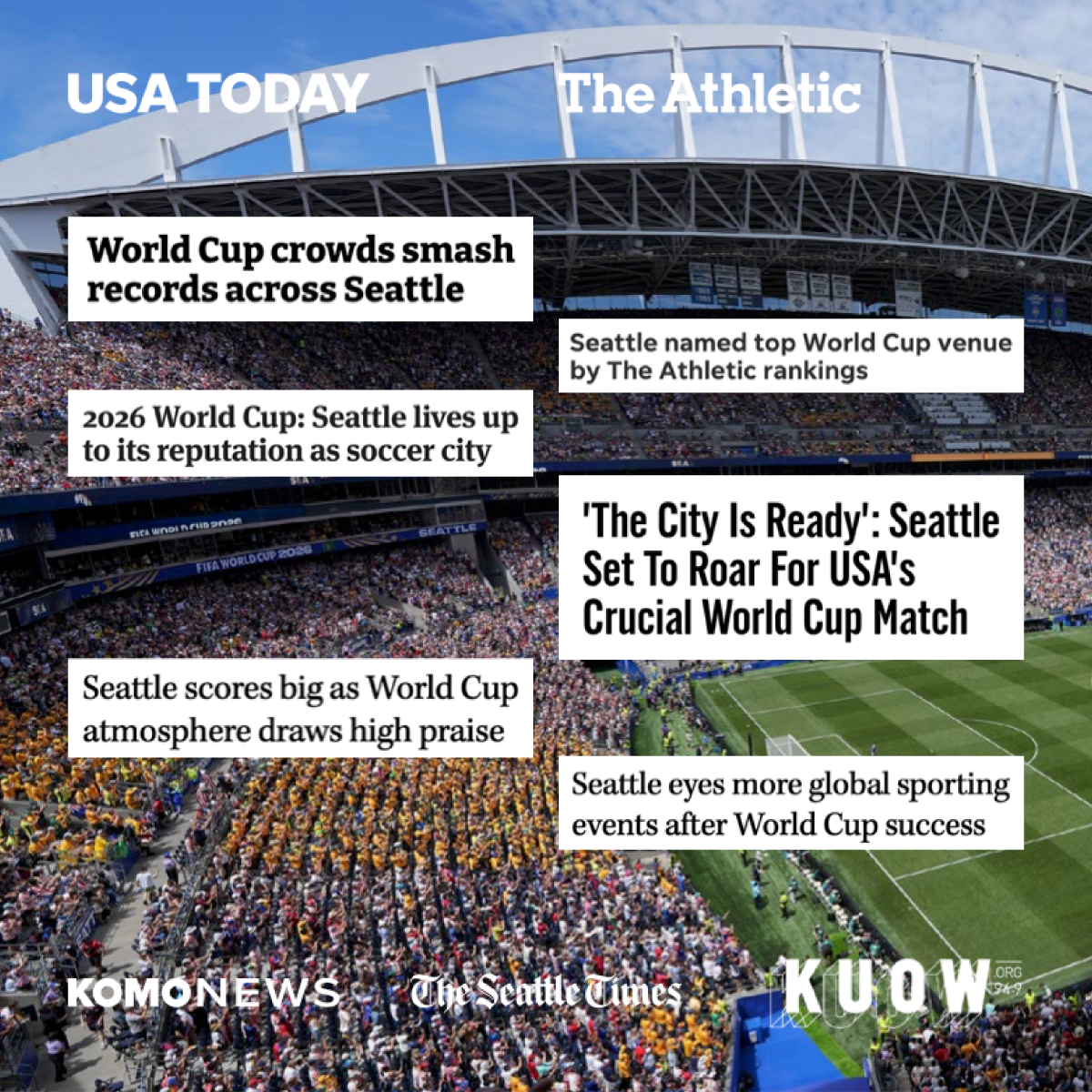
Seattle and Lumen Field earned national recognition throughout the FIFA World Cup, with some of the tournament’s highest rankings for stadium experience, atmosphere and the city surrounding it.